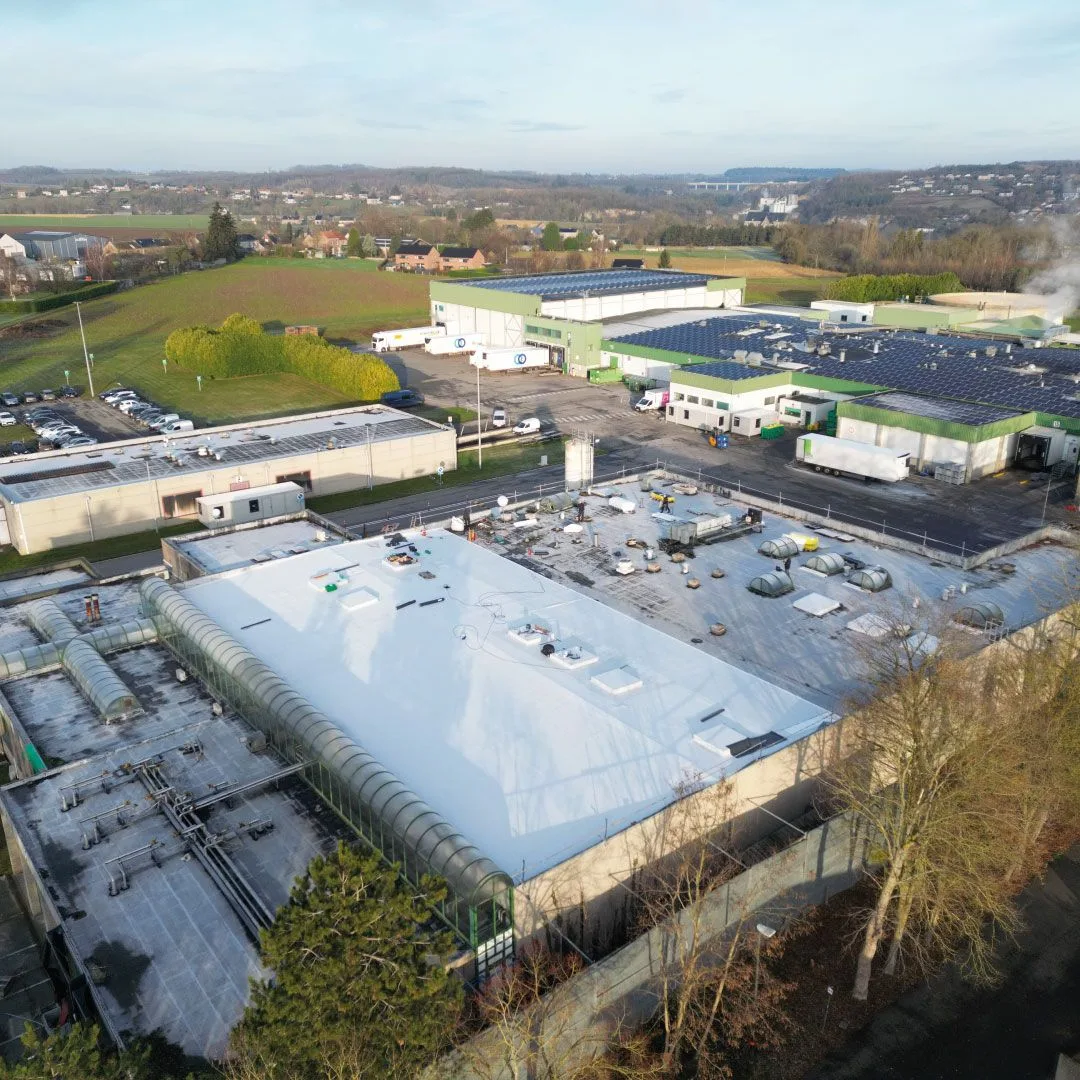
The lifespan of an industrial flat roof does not depend solely on the choice of waterproofing membrane. It is the result of a combination of factors that must be considered from the design or renovation of the roof system onwards: quality of materials, workmanship, maintenance and future uses.
Waterproofing and its installation
The choice of waterproofing and the quality of its installation are two decisive factors for the lifespan of a flat roof. Synthetic PVC or TPO membranes offer excellent durability when they are correctly installed and suited to the building’s constraints.
Particular attention must be paid to joints, upstands, drainage outlets and other sensitive areas, as well as to the future uses of the roof, so that adding equipment such as photovoltaic panels does not prematurely weaken the roof system.
Maintenance, the key to longevity
Finally, maintenance plays a major role in a roof’s longevity. Regular inspections make it possible to quickly identify damage, keep drainage outlets in good condition and act before a minor issue leads to more serious damage. With this in mind, Vincent Piront SA believes that a roof’s durability must be considered from the design stage and preserved throughout its service life.
“A roof’s longevity does not depend on a single material, but on the quality of the whole system, its installation and its maintenance.”
Factors that influence its lifespan
- Waterproofing: a membrane suited to the roof’s uses.
- Workmanship: careful installation across the entire roof.
- Maintenance: regular inspections to detect damage quickly.
- Anticipation: plan for any future technical equipment on the roof.
Knowing the condition of your roof allows you to anticipate its ageing and plan interventions at the right time.